Most Triangle homeowners comparing flooring options are really deciding between two products: luxury vinyl plank (LVP) and engineered hardwood. Both look like real wood at a glance, both hold up better than solid hardwood in a humid climate, and both are reasonable choices in the right room. The decision comes down to where in the house the floor is going and how much humidity swing that room actually sees.
Which Floor Wins in NC Humidity — LVP or Engineered Hardwood?
For basements, slab-on-grade rooms, and spaces with direct plumbing exposure, LVP is the more moisture-tolerant choice; for main-level living spaces in a climate-controlled home, engineered hardwood performs well and reads as a higher-value finish. Raleigh's relative humidity runs from a low of 61% in April to a high of 78% in August, averaging 70% across the year — Weather and Climate.com (NOAA-sourced data), 2025. That's enough sustained moisture in the air to matter for any wood-based product, which is why the subfloor and the room's moisture exposure — not personal taste alone — should decide which product goes where.
How Do the Two Products Handle Moisture Differently?
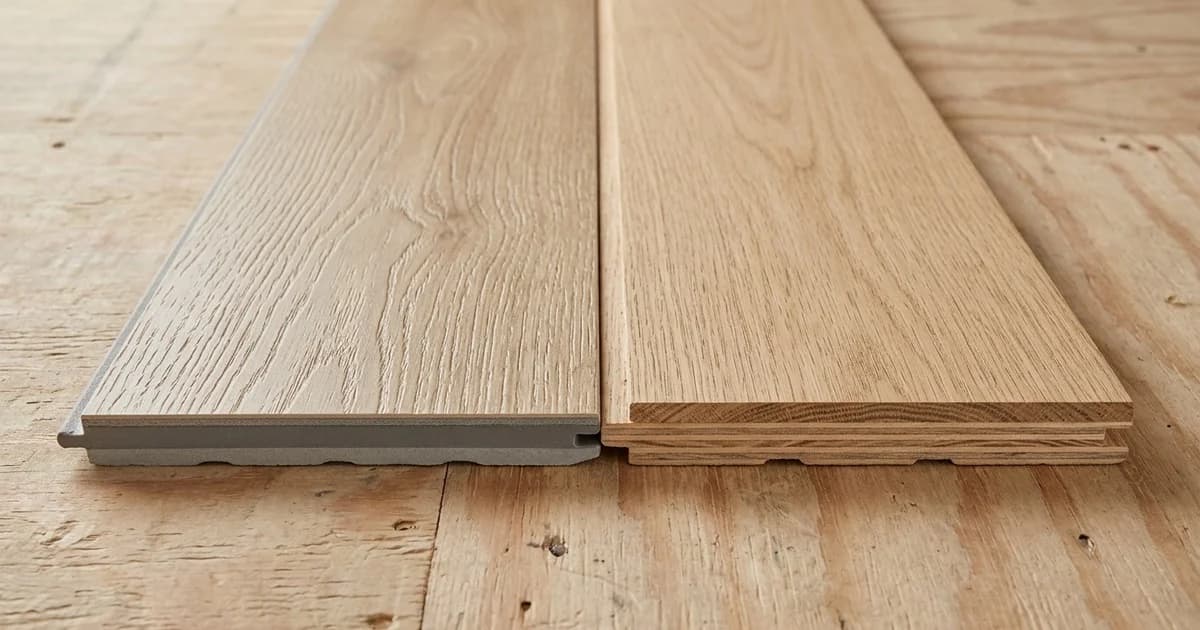
Engineered hardwood expands and contracts roughly 50% less than solid hardwood, thanks to a cross-layered plywood or high-density-fiberboard core that resists the swelling and shrinking solid wood experiences with seasonal humidity changes — Vantia Hardwoods, 2025. That stability is real, but it isn't moisture-proof: sustained high humidity or standing water will still cause an engineered floor to cup or delaminate over time.
LVP is a fully synthetic wear layer over a rigid or flexible core, so it doesn't absorb ambient humidity the way any wood product does. That makes it the safer default for bathrooms, laundry rooms, and below-grade spaces — anywhere sustained moisture exposure, not just seasonal humidity, is a realistic risk.
What Subfloor Prep Does Each Product Actually Need?
Engineered hardwood is less forgiving of an unprepped subfloor than LVP. Because engineered planks are typically nailed, glued, or floated over an underlayment with tighter flatness tolerances, moisture testing of the slab or subfloor, to the flooring manufacturer's written requirements, is a required step before installation, not an optional one. LVP's floating or click-lock installation is more tolerant of minor subfloor imperfections, though a moisture barrier is still standard practice over any slab-on-grade area, including many newer-construction homes in fast-growing areas like Holly Springs where slab conditions vary by lot and builder.
Which Floor Holds Up Better With Kids and Pets?
LVP's wear layer resists scratches, dents, and moisture staining better than engineered hardwood's real-wood veneer, which can dent under heavy furniture or a dropped object and can't always be sanded and refinished the way solid hardwood can. Engineered hardwood still outperforms laminate and holds up reasonably well under normal foot traffic, but if the deciding factor is a high-traffic household with kids or pets, LVP's synthetic wear layer is the more forgiving surface day to day.
Which Floor Does Better at Resale?
Real wood — including engineered hardwood with a genuine wood veneer — still reads as a premium finish to most buyers walking through a home, while LVP reads as a practical, durable choice rather than a luxury one. Bathroom remodeling continues to be one of the most common remodeling projects nationally, with 73% of remodelers rating it common to very common in 2025 — NAHB, 2026 — which reflects a broader trend of homeowners investing in finishes that buyers notice, and flooring is part of that same calculation.
Does the Flooring Market Data Back Up Choosing LVP?
Demand for luxury vinyl has grown fast enough to reshape the flooring aisle nationally: the U.S. vinyl floor covering market was valued at $12.57 billion in 2025 and is forecast to reach $18.06 billion by 2030, a 7.53% compound annual growth rate — Mordor Intelligence, 2025. That growth is one reason LVP no longer reads as a downgrade the way vinyl flooring once did; the product category itself has changed.
Does Installation Method Change Which Floor Makes Sense?
Engineered hardwood is typically nailed, glued, or floated, and refinishing options are limited by veneer thickness — a thin wear layer can usually be sanded and refinished once, sometimes not at all, while a thicker veneer allows for more than one refinish over the floor's life. LVP is almost always a floating, click-lock installation that doesn't bond to the subfloor the same way, which makes it faster to replace in a single damaged area but means it can't be refinished the way a real-wood surface can — when a plank is truly worn out, that section gets replaced, not sanded down.
LVP vs. Engineered Hardwood — Side-by-Side
| Factor | LVP | Engineered Hardwood |
|---|---|---|
| Moisture tolerance | High — synthetic, doesn't absorb humidity | Moderate — ~50% less movement than solid wood, but not moisture-proof (Vantia Hardwoods, 2025) |
| Subfloor prep | More forgiving of minor imperfections; moisture barrier still standard over slab | Requires a flatter subfloor and a slab moisture test to the manufacturer's requirements |
| Kid/pet durability | High wear-layer resistance to scratches and dents | Good, but real-wood veneer can dent and has limited refinish capacity |
| Resale perception | Practical, durable — not a luxury signal | Reads as a premium, real-wood finish |
| Best NC use case | Basements, bathrooms, laundry rooms, slab-on-grade rooms | Main living areas in climate-controlled homes |
Is This Decision Different for a Holly Springs Home Than a Raleigh Home?
The underlying moisture physics are the same across the Triangle, but newer-construction towns like Holly Springs often have more slab-on-grade square footage in open-concept main levels, which shifts more of the house into LVP's better-fit category. Older Raleigh homes with crawlspaces have their own moisture considerations — crawlspace humidity affects the subfloor from below, which is why a moisture assessment matters regardless of which product you choose.
FAQ
Is LVP considered a downgrade compared to engineered hardwood? No — it's a different tool for a different job. LVP is the stronger choice anywhere sustained moisture is a realistic risk; engineered hardwood is the stronger choice for main living spaces where the wood-look finish matters most for resale.
Can engineered hardwood go in a bathroom? It's not the recommended choice for a full bathroom given sustained humidity and splash exposure — LVP or tile are better fits there.
Does LVP need a moisture barrier over a concrete slab? Yes, a moisture barrier is standard practice over slab-on-grade installations regardless of product, since even LVP's synthetic core benefits from vapor management underneath.
How do I know if my subfloor is ready for engineered hardwood? A moisture test of the subfloor or slab, to the flooring manufacturer's requirements, is the correct first step before any engineered hardwood installation.
Which floor is better for a Holly Springs new-construction home? It depends on the specific room and slab conditions on that lot; we measure the subfloor's moisture with a meter at several points before installation, which is how that call gets made room by room rather than guessed from the house's age alone.
Ready to figure out which floor fits which room in your home? Explore flooring installation, see our Raleigh service area page or Holly Springs flooring page, and request a written flooring estimate.