If you are planning a bathroom remodel in Raleigh, Cary or Durham, waterproofing will appear as a line on every estimate you collect. It will look like the same line each time. It is not — there are two fundamentally different methods behind that word, and which one a contractor uses is the single biggest factor in how long the shower lasts.
What Is the Difference Between Water-Managed and Bonded Waterproofing?
A water-managed shower assumes water will get through the tile and builds a system to catch it. A bonded shower stops the water before it reaches anything. That is the whole distinction, and everything else follows from it.
The water-managed method was the standard for decades. Cement board goes on the studs — it will not rot, but it is porous, and water passes straight through it. A plastic vapor sheet behind it keeps the framing dry. A rubber pan liner at the base catches whatever has already come through the tile and the mortar bed, and drains it out through weep holes.
It works, in the sense that the house does not rot. But it works by accepting that the assembly stays wet. The tile, the grout and the mortar bed sit damp between uses, and in a Raleigh summer they dry slowly. That is the environment mould and efflorescence want.
What Does "Bonded" Actually Mean?
Schluter-KERDI is a sheet-applied membrane with non-woven fleece on both faces, set into thin-set mortar. It goes on top of the substrate and directly behind the tile — so the water never reaches the wallboard, the framing or the mortar bed at all. There is nothing behind the membrane to stay wet, because nothing behind it gets wet.
The measurable version: KERDI has a water vapor permeance of 0.90 perms, tested to ASTM E96 procedure E at 90% relative humidity — Schluter Systems, Waterproofing Data Sheet. That is not just liquid water stopped at the surface. It is vapor movement into the wall cavity held to a specified rate, which is the mechanism behind hidden mould in a humid climate.
Why Does This Matter More in North Carolina Than It Would Elsewhere?
Because drying is the part our climate is bad at. A wet assembly in a dry climate gives up its moisture between uses. A wet assembly through a Triangle August does not — the air outside the shower is already carrying moisture, so the gradient that would pull water out of the mortar bed is weak for months at a time.
That does not make a water-managed shower fail tomorrow. It means the margin that method depends on is thinner here than in the regions where the method was developed.
Where Do Showers Actually Leak?
Not usually through the middle of a tiled wall. They leak at the interruptions: the drain connection, the niche, the curb, the inside corners.
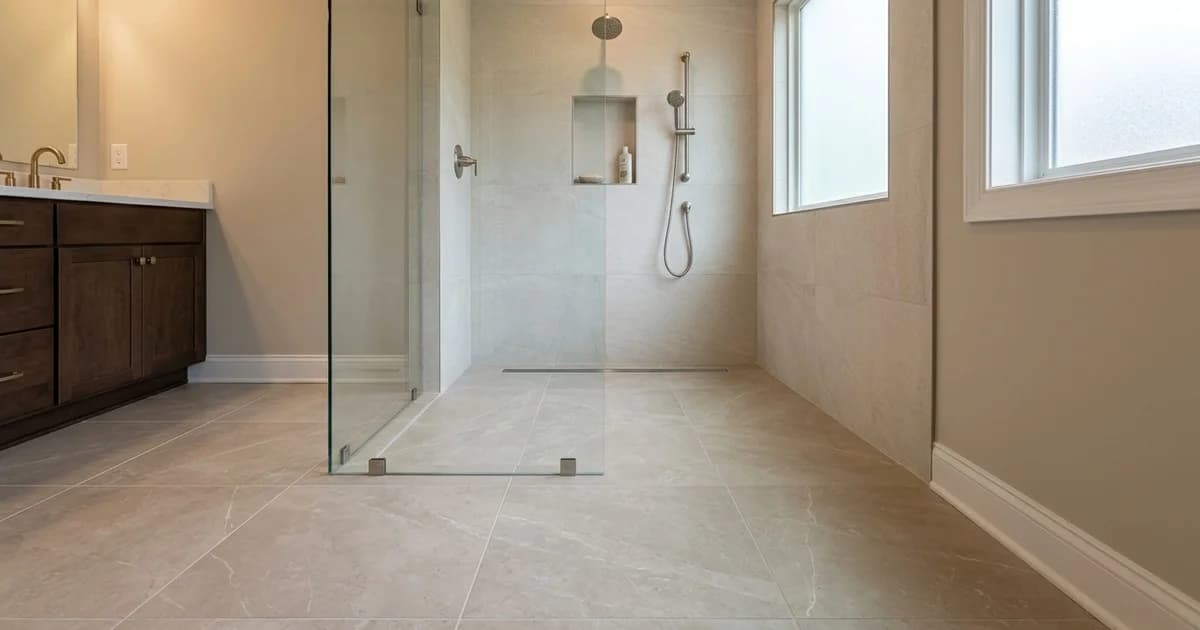
The drain is the classic one. A traditional clamping-ring drain sandwiches the pan liner between two metal rings and relies on that compression staying tight. The Schluter drain used with a KERDI system has a wide bonding flange instead, giving the membrane a large area to bond to — a continuous seal rather than a clamped joint.
The niche is the second. A niche interrupts the wall plane and adds a shelf, two more inside corners and a horizontal surface where water collects. Built without its own membrane wrap, it is the first place a builder-grade shower shows trouble. Grout separation or discoloration at a niche corner is usually a symptom rather than the problem.
What Does Movement Have to Do With Waterproofing?
More than it sounds. North Carolina's clay soils expand and contract with moisture, and that movement reaches the slab and the framing above it. Tile does not flex; a substrate that moves under rigid tile transfers stress into the tile and the grout, and that is how cracks appear in an installation that was set correctly.
Schluter-DITRA handles this, and it is a different product from KERDI doing a different job. DITRA is an uncoupling layer: it lets the substrate move underneath without carrying that movement into the tile above. Waterproofing and uncoupling are two layers with two purposes, and conflating them is one of the more common ways an estimate looks thorough while missing something.
What Does This Standard Look Like in Practice?
- The membrane is continuous — walls, floor, niche, curb line, every corner. Not spot-sealed at the places that look vulnerable.
- The mortar bed falls at least 1/4 inch per foot toward the drain.
- The substrate is corrected to under 3/16 inch over 10 feet before anything is set, checked with laser tools.
- Finished tile is held to lippage under 1/16 inch with rectified tile.
- Grout is set on a 100% coverage bed; epoxy grout is available where the floor takes heavy traffic.
We install the Schluter-KERDI or Wedi system on every shower, not as an upgrade line. The reason is simple enough to say plainly: the waterproofing is the part of the job a homeowner can never inspect once the tile is up.
How Can a Homeowner Check the Waterproofing Was Done Right?
By looking before the tile goes on, which is a narrow window and the only one there is. Once the wall is tiled, every method looks identical from the outside — which is precisely why the cheaper method survives in the market.
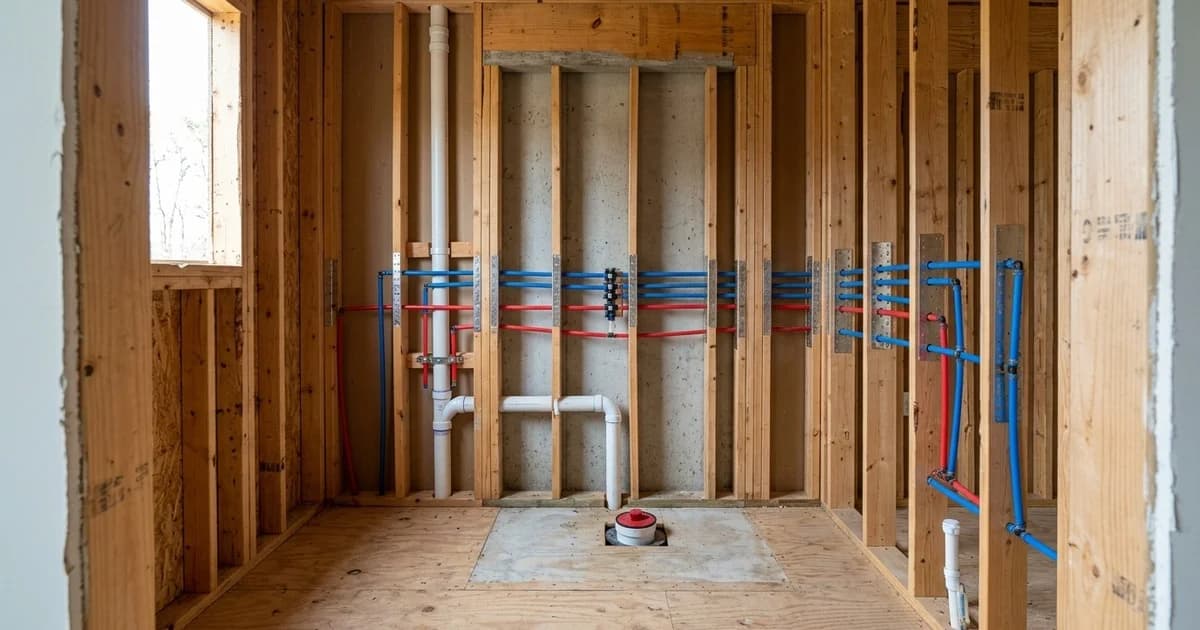
Three things are visible at that stage and worth photographing:
- The membrane is continuous. Look at the inside corners, the curb and the niche, not the flat wall. Corners are where a rushed job leaves a seam unsealed.
- The niche is wrapped, shelf and back included, in the same membrane as the surrounding wall.
- The drain flange has membrane bonded to it, rather than a liner clamped between two rings.
Ask for photographs of the waterproofing stage even if you cannot be there. On our projects the waterproofing is documented before tile, and it is the stage worth having a record of — a shower failure five years out is almost always traced to something that was visible for one afternoon and then covered up.
FAQ
Is Schluter-KERDI worth it on a small hall bathroom, or only on a primary suite? The failure mode does not care how big the room is. A guest shower used twice a week has the same wall cavity behind it as a primary shower used twice a day.
Can KERDI go over an existing cement board wall? Yes — it is applied over the substrate in thin-set, and cement board is a normal substrate for it. What matters is that the substrate is sound and flat first.
Does a bonded system mean I never need to re-grout? No. Grout is a surface material and it still wears, stains and occasionally needs attention. The difference is that grout is no longer the thing standing between water and your framing.
What is the difference between KERDI and DITRA — are they interchangeable? No. KERDI waterproofs. DITRA uncouples tile from a moving substrate. A shower floor commonly wants both, and they are not substitutes for one another.
How do I tell from an estimate which method a contractor is using? Ask which membrane, by name, and where it stops. "Waterproofing included" describes both methods equally. A bonded system has a product name and a boundary.
Every project carries a 1-year workmanship warranty, and the written itemized estimate follows the site visit. To see how this fits a specific project, start with bathroom remodeling, see what we build across Raleigh, or request a written estimate.